
Introduction
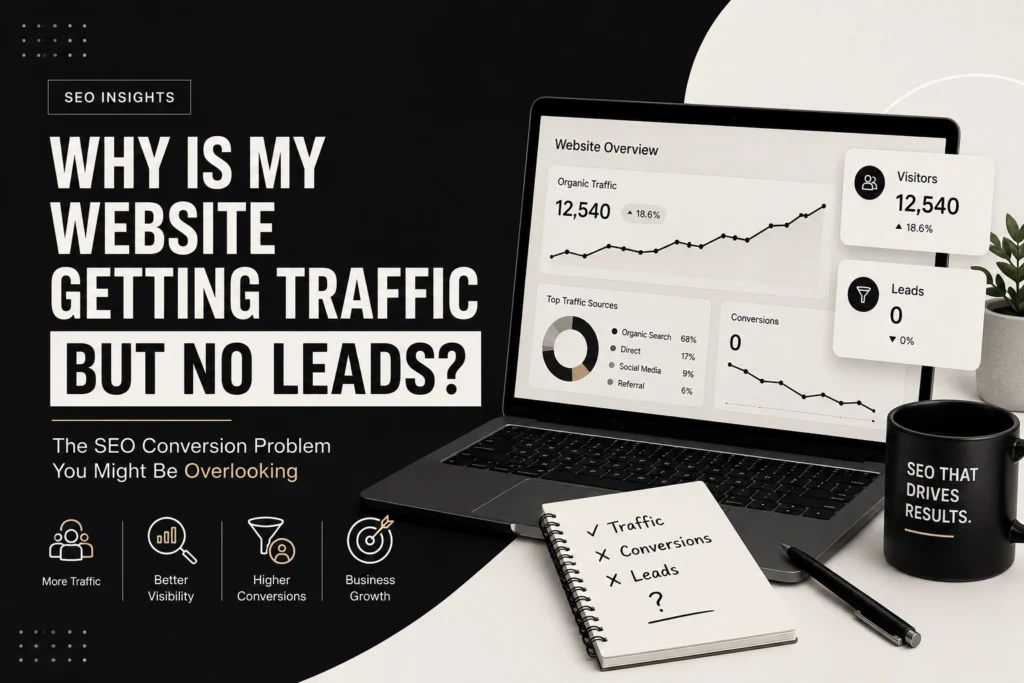
Getting traffic to your website is a good sign, but traffic alone doesn’t guarantee business growth. Many sites attract visitors through Google search, social media, or paid ads but struggle to convert those visitors into leads or customers.
This often indicates that the issue goes beyond just SEO traffic. Your website may rank for the wrong keywords, target users with low intent to buy, or provide a poor experience once visitors arrive.
SEO should do more than just increase website visitors. A successful SEO strategy should attract the right audience and guide them toward taking action.
1. You Are Targeting the Wrong Keywords
One common reason why websites get traffic without generating leads is targeting keywords with high search volume but low intent to buy. For instance, a person seeking “What is digital marketing?” is probably trying to find information.
Instead of focusing only on search volume, consider:
– Search intent
– Relevance to your service
– Buying stage
– Competition
– Potential business value
The goal isn’t to get the most traffic. It’s to get relevant traffic.
2. Your Content Does Not Match Search Intent
Visitors leave when the content doesn’t meet their expectations. If a user searches for “SEO services for small businesses” and lands on a general article about SEO, they likely won’t find what they need. Before creating content, understand why people are searching for a keyword. Search intent generally falls into four categories:
– Informational: Looking for information
– Navigational: Looking for a specific website or brand
– Commercial: Researching products or services
– Transactional: Ready to take action
Matching your content to the user’s intent can improve both engagement and conversions.
3. Your Website Has Weak Calls to Action
A visitor may be interested in your service but might leave if you don’t clearly tell them what to do next. Every key page should have a clear call to action (CTA).
Instead of generic buttons like “Click Here”, use action-focused CTAs such as the following:
– Get a Free Consultation
– Request a Quote
– Book a Strategy Call
– Get Your SEO Audit
Your CTA should stand out and connect to the visitor’s needs.
4. Your Landing Page Is Not Built for Conversion
SEO can bring visitors to your site, but your landing page must convince them to stay and take action.
A high-converting landing page should quickly communicate:
– What you offer
– Who it is for
– Why it matters
– What the visitor should do next
Avoid overwhelming visitors with unnecessary information. Use clear headlines, benefits, supporting proof, testimonials, and simple navigation.
5. Your Website Is Hard to Use or Slow
User experience can directly influence how visitors interact with your website. If pages load slowly, navigation is unclear, or the website doesn’t function well on mobile devices, visitors might leave before contacting you.
Ensure your website is:
– Mobile-friendly
– Fast-loading
– Easy to navigate
– Easy to read
– Simple to contact
SEO draws people to your site, and good user experience helps keep them there.
6. You Are Not Building Enough Trust
Visitors rarely become leads if they don’t trust the business behind the website.
Build credibility through:
– Client testimonials
– Case studies
– Reviews
– Certifications
– Portfolio examples
– Clear business information
– Results and measurable outcomes
Trust becomes especially important when visitors are considering an expensive service or long-term relationship.
7. You Are Measuring Traffic Instead of Conversions
Website traffic is an important SEO metric, but it shouldn’t be your only goal.
Track metrics such as the following:
– Leads generated
– Contact form submissions
– Phone calls
– Consultation bookings
– Conversion rate
– Leads from organic search
– Revenue from organic traffic
This helps you understand whether your SEO strategy is really contributing to business growth.
Frequently Asked Questions
Why am I receiving visitors to my website but no leads?
Your website may be attracting the wrong audience, targeting low-intent keywords, or failing to provide a clear path to conversion. Poor user experience and lack of trust can also lower lead generation.
Does more SEO traffic mean more customers?
Not necessarily. More traffic is only helpful if it comes from people genuinely interested in your products or services. Relevant traffic is more valuable than just high traffic volume.
How can I increase SEO conversions?
Start by targeting high-intent keywords, aligning content with search intent, improving landing pages, adding stronger CTAs, building trust, and making your website more user-friendly.
Should I focus on SEO or conversion optimisation?
You need both. SEO attracts potential customers, while conversion optimisation helps turn those visitors into leads or customers. Combining the two creates a stronger digital marketing strategy.
Conclusion
Getting website traffic is just the first step. If visitors aren’t becoming leads, the issue could lie somewhere between search intent, SEO targeting, user experience, trust, and conversion strategy.
For instance, a person seeking “What is digital marketing?” is probably trying to find information.”
A successful SEO strategy is not just about ranking higher on Google. It’s about attracting the right audience, providing value, building trust, and turning visibility into measurable business results.